







Dextran
Dextran is a naturally-derived polysaccharide, a complex sugar molecule, that serves as a multi-functional powerhouse in advanced skincare. Valued for its unique texture-enhancing and hydrating properties, this ingredient helps create cosmetically elegant formulas that feel as good as they perform, leaving skin feeling soft, smooth, and moisturized.
Natural Science
Scientifically, dextran is a biopolymer composed of a long chain of glucose molecules. It is produced through the natural fermentation of sucrose by friendly lactic acid bacteria, most notably Leuconostoc mesenteroides. This process is similar to how other fermented ingredients in our diet and skincare are created.
This biological origin makes dextran exceptionally biocompatible with our skin. In cosmetics, its molecular weight can be modified to achieve different effects, from a lightweight hydrator to a more substantial film-former. Its safety and efficacy are well-documented, with a long history of use in both medical and cosmetic applications.
Benefits of Dextran in Skincare
As a versatile ingredient, the benefits of dextran for skin are numerous, centering on hydration, texture, and ingredient stabilization. It functions as a quiet supporter in a formula, enhancing the overall sensory experience and boosting the efficacy of other actives. Extensive use has shown it is well-tolerated, answering the question `is dextran safe for skin` with a confident yes.
- Moisture Binding: As a polysaccharide, dextran is an effective humectant. It grabs onto water molecules and holds them at the skin's surface, helping to increase hydration levels, reduce dryness, and give the skin a plump, dewy appearance.
- Texture Enhancement & Film-Forming: Dextran imparts a silky, non-tacky feel to cosmetic formulas. It forms a soft, flexible film over the skin that locks in moisture and other ingredients without feeling heavy, resulting in a visibly smoother complexion.
- Soothing Properties: Certain derivatives of this ingredient can offer significant calming benefits. In fact, the compound found in `dextran sulfate skin care` is specifically prized for its ability to soothe irritation and reduce the appearance of redness.
How Its Used in Nuebiome Products
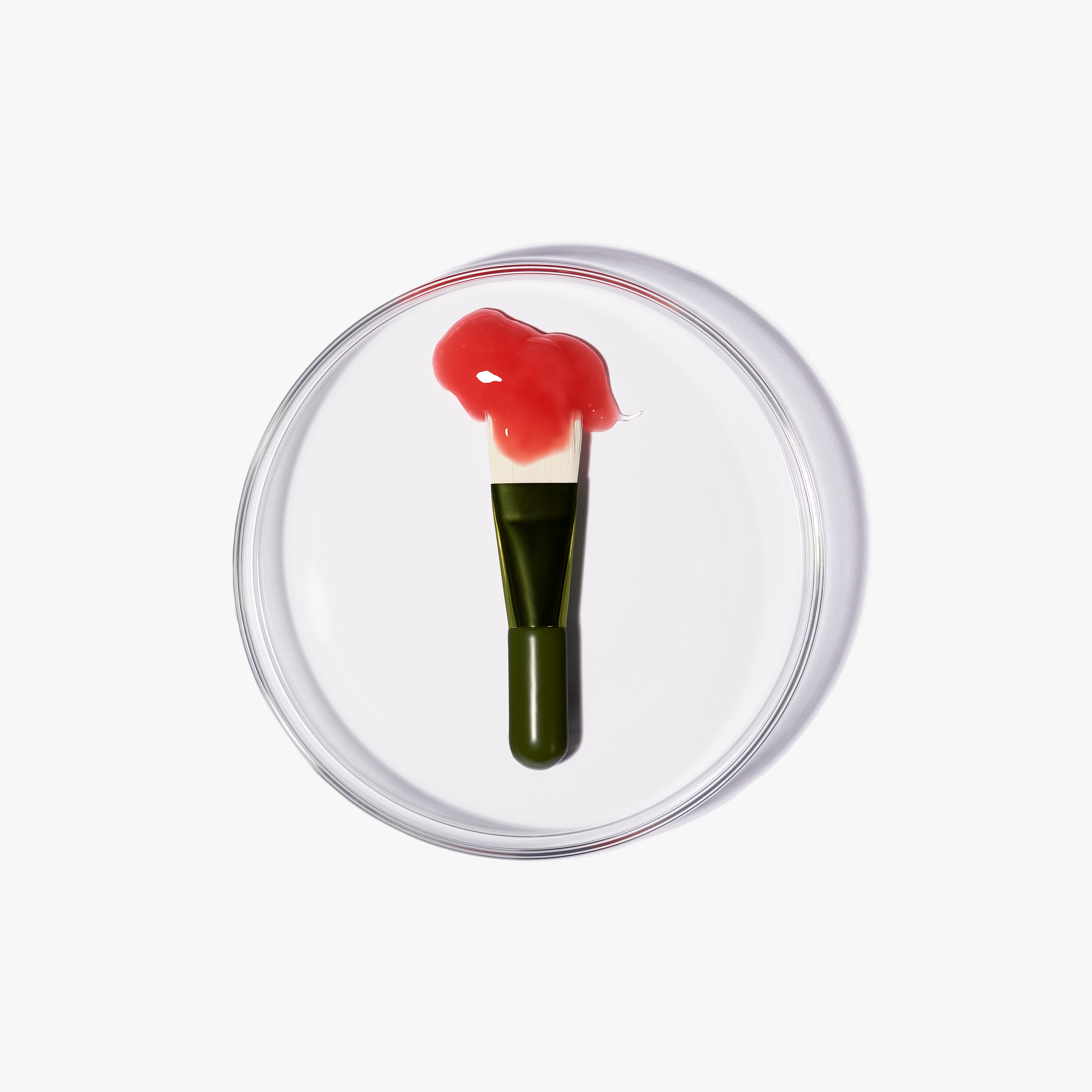
At Nuebiome, we harness the elegant textural and hydrating properties of dextran to create sophisticated, high-performance formulas. Its ability to improve moisture retention and create a silky feel makes it a key component in our advanced treatments. You can experience its benefits in our:
(Glyco-Biotic)™ Ultra-Synbiotic Face Mask.
Research
In dermatological and biomedical research, dextran serves as a vital tool for understanding skin's complex systems. Studies have utilized fluorescently labeled dextran to visualize and study the skin's lymphatic microcirculation, which is critical for immune response and fluid balance. Furthermore, modified dextran is a gold-standard agent used to measure barrier integrity, such as intestinal permeability, which is increasingly linked to skin health through the skin-gut axis. Its use in these advanced studies highlights its biocompatibility and importance in furthering our knowledge of skin physiology.
Frequently Asked Questions about Dextran
What is dextran used for in skin care?
In skincare, dextran is primarily used as a humectant to hydrate the skin, a film-former to provide a smooth feel and lock in moisture, and a viscosity controller to improve a product's texture. It can also have soothing properties and help stabilize other active ingredients within a formula.
Is dextrin good for skin?
Dextrin is a different, though related, polysaccharide also used in cosmetics. Like dextran, it is generally considered safe for skin and is used for its texture-enhancing and film-forming properties. While this article focuses on the specific benefits of dextran, both ingredients are valued for creating elegant formulations and are well-tolerated by the skin.
Dextran References
Fluorescence microlymphography.. Circulation, Dec 1981
Dermal injury drives a skin to gut axis that disrupts the intestinal microbiome and intestinal immune homeostasis in mice.. Nat Commun, Apr 2024
Benvitimod Inhibits IL-4- and IL-13-Induced Tight Junction Impairment by Activating AHR/ARNT Pathway and Inhibiting STAT6 Phosphorylation in Human Keratinocytes.. J Invest Dermatol, Mar 2024